Integrated Agile Transformation Model (IATM)

That is fine there is another model how to run agile transformation in an organization.

During this academy we studied this approach with several masters and professionals.

The model is supported well will explanation, descriptions, visual stuffs.


Overview of IATM model


The agile transformation is based on waves, which are basically one month period, but you can customize as you wish.

The architect of the IATM model highlighted that, it is an agile process, and executed in an agile way, so it contains a lot of iteration, feedback, there are the traditional agile roles also.

So for a transformation project you need your team to execute the project, and the teams and stuff from the organization side.

1. Contract

There is a client, first lets analyze and agree on the expectations! 

2. Assessment

Each wave has a mission to analyze the current situation at a piece of the organization. You can start from the top or even from the bottom, or both. What is very typical, you start at the not most risky team or department.

During the assessment you will observer and identify the knowledge, practice and exercise gaps. It will be your Product backlog.

3. Academy

Kind of teaching part. The coaches become teachers and using trainings, workshops, pair working start to explain the theory and the meaning of content. It can be agile mindset, iteration, leadership, feedback etc.

4. Synchronize

Lets start to use what the team learned. Create visuals, new workspace, plan the rituals, working agreements.

5. Follow

Lets see as a coach how the rituals are running. The teams starts the first steps alone.

6. Lead

It is the time to coach individually. The teams and participants receive feedbacks.

7. Handover

Retrospective with the team and Backlog refinement for the next wave / iteration.

In summary

I just wrote here a little overview of the IATM process. There are many knowledge and technics behind for each steps.

I would not say you can find more details on the website, but you can find contacts there.

A few important parts I will share also later.

https://integratedagile.com/


Coaching working types

Shadow coach

Working behind the sciences and following experienced coaches.

Co-coach

Working together with other coaches, not completely independent.

Lead-coach

Leading a project, could work alone.

Six principals for the right mental path and changes


There are many reasons to delay a change in the team or organization. You will miss the train of the opportunity with each delay. Do you have doubt? Try to understand first with the team the next six principals before starting the journey:

  1. It’s always a good time to make a change
  2. Believe in your idea
  3. Share your idea
  4. Accept feedback
  5. Have a passion for collectively bringing the idea forward
  6. Assume the decisions made by others can always be changed

Bühler, Erich R. Leading Exponential Change: Go beyond Agile and Scrum to run even better business transformations 

Profiling

We did a nice exercise for profiling your client.

It helps you to better understand and select you tools as a coach.

Levels

  1. Identity - what is the identity of the person is coming to you?
  2. Values and beliefs: how is it important this problem?
  3. Capabilities: Does he has all the capabilities to solve his problem?
  4. Behavior: is he going closer to the solution?
  5. Environment: is there a supporting environment?

Ok, I wrote there questions, they indicated the meaning of the level. but as a coach we should ask better questions:

  1. Identity - what is your role around this problem?
  2. Values and beliefs: how is it important this problem?
  3. Capabilities: Do you have all the skills to solve the problem?
  4. Behavior: What you would do to solve the problem?
  5. Environment: Could you find support for your solution?
You can do this exercise also for yourself when you face with a problem.


Dialog exercise for commitment

We need commitment from the teams very usually. They should have ownership and a strong relation with the topic to build responsibility.

This commitment is supported by a conversation, dialog.

Exercise: Vision, Values, Commitment

We built up our Vision (WHY), it can be general or personal, and try to find a collection of value (WHAT).

The journey to improve our values step by step and reach the vision is working via the commitments.

During this conversation we try to find what are the values to become a coach and how we can support this goal.

My commitments to become a Technical and Team coach:

  • Joining agile academy workshop
  • working with developers and team
  • pair-coaching with IATM coaches
  • joining conferences, meetups
  • practice self reflections
  • reading relevant books
  • start blogging and sharing the journey
  • earn ICF ACC certification
  • follow IAF trainings


8 elements of coaching

So a people could have 36 identities.

Just try to avoid no to mix them. So you arrive home from work where you were an manager and you wife ask you something, dont forget, you are the husband!

Coaches has eight very important identities, they use them in different situations.

Your identity can be defined also by your opponent, for example if he takes  a child role, you will play as an adult.


Coach

you are focusing on developing a shared goal. your tools are the questions.

Mentor

You are focusing on developing the how-to, normally it is a pair work.

Trainer

You are teaching the team, sharing knowledge, focusing on the learning outcomes.

Facilitator

You are helping the team for their goal and outcome. Avoid conflicts, miscommunication, introduce transparency.

Lean Leader

Promoting for life-long learning the teams.

Change agent

Develop a formal path for the change

Consultant

You share your experiences, the best practices, giving advises and problem solving.

Problem to Opportunity exercise

 Let see your team has a problem, and they turn to you to find a solution. 

As a coach it is better not to provide a solution, they have find their solution, because they will find the connection and see they are the owner of the solution. They can do commitment more easily to deliver the solution.

Opportunity Tree Analysis

Lets invite the team for a workshop to find a solution for a problem.

The Opportunity tree analysis is a very good practice for this.

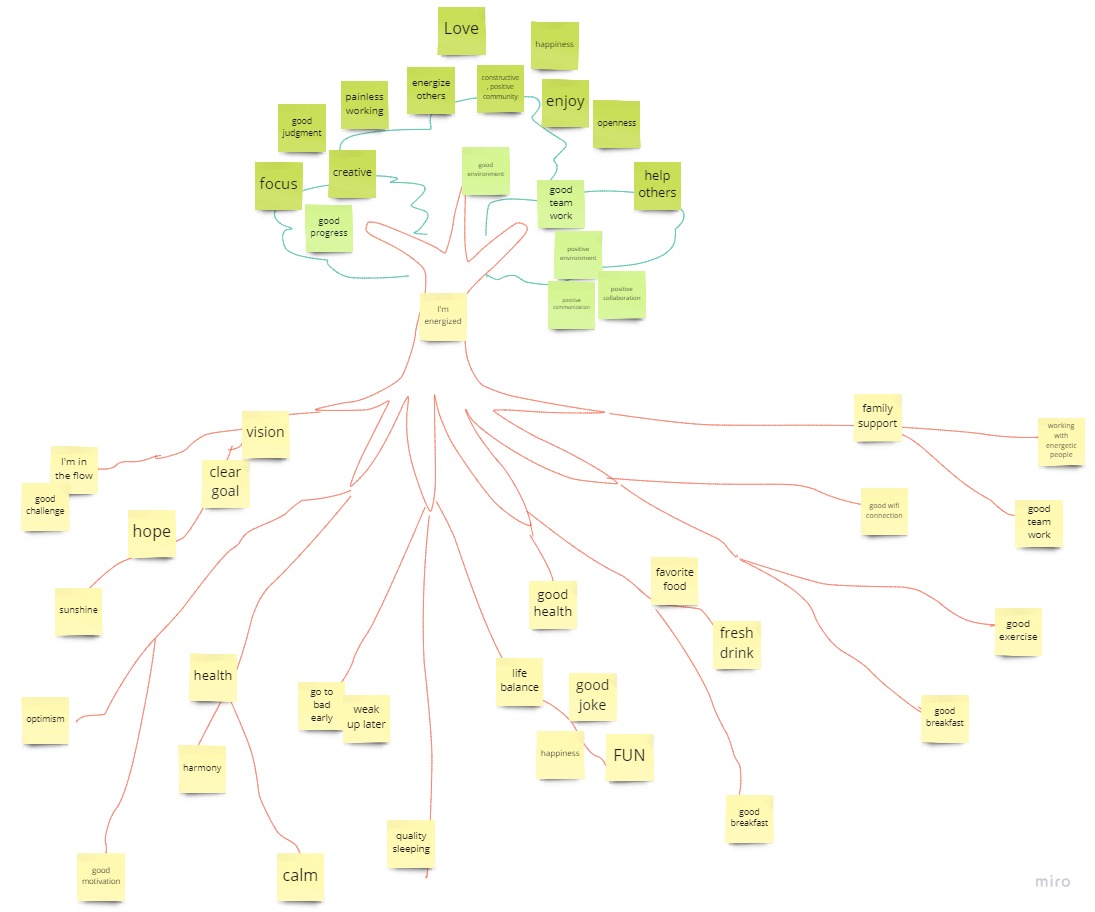
Let's create a  Tree about a problem, and then find the desired situation of the problem.

Try to identify what could support this desired situation. Later you can collect together the possible outcome of this positive, desired situation.

Example of "I am tired"

We selected a personal or general problem to solve and see the outcomes.

1) The problem tree:


We placed in the roots of the tree what could support this problem. Just a few ones are:

  • eating to much
  • sickness
  • lack of quality sleeping
  • stress etc.
2) Now lets create the Opportunity tree. We selected "I am energized!"


So when you think about with the team what could support I am energized, you can find a lot of positive things, just a few:
  • fun
  • health
  • hope
  • vision
  • calm etc
3) The green leaves can be the outcome of you are energized.
  • Enjoy the work
  • Help each other
  • Love
  • Focus
  • Energize others
You can see in a one hour exercise we can help the team to focus on the positive side of the problem, and seeing the opportunity of the original problem if we turn to the solutions.

We have the yellow postits as solution and the green postits as the reason why to do that.


5 Classic principals of integrated Agile coaching

1. Constructionist principal

Words create worlds. The reality is created through the language and the conversations.

2. Simultaneity principal

Inquiry creates change, and when we ask the question, we begin to create the change.

3. Poetic principal

What we choose to study makes us different. It describes the world as we know.

4. Anticipatory principal

The human system move in to the direction, what they can imagine. It should be a positive and hopeful image of the future.

5. Positive principal

Positive questions lead the individual  or the team to positive changes.


Immunity to change in Agile transformations

We face with immunity, ignorance, resistance, rebellion. Of course! why and how we can handle it?

You see animal about to change or die in worst case. Why human-being can not accept change?

Integrated performance model

How can I improve my performance and team performance?
You need good feelings, emotions for good results!


Lets take an example, you feel anxious.

Level State
behavior stress
thinking alternatives, interpretations
feel fear
emotions feel trapped
physiology sweaty hands

So what we can expect a team member, who is anxious? he is thinking on alternatives, he has fear, he feels trapped?

So well being and safety is very important for the team members to open up and work on the topics. They need definitely good feelings.

Recommended readings:


  • Immunity to Change: How to Overcome It and Unlock the Potential in Yourself and Your Organization (Leadership for the Common Good)

Exercise

Team immunity to change. Look at your team, when you start to change things in the team, what happens in the team?

Skill and will matrix

There is no one size fits all solution to maximize the team members performance. How can the leader minimalize this performance.

There is the skill and motivation matrix to help to determine what to do with each individual.


Aspiring, we need to provide a Development plan and have regular check in meetings.

Capable, we need one on one sessions, and new challenges.

Excelling, we need to delegate some tasks, let them to develop others and check their progress together.

Doubtful, we need to do a root cause analysis, maybe create together an improvement plan, organize regular meetings for feedback, maybe find an alternative role together.